




Masterpieces of the Renaissance from the Musée du Louvre
Chefs-d’œuvre de la Renaissance du musée du Louvre
September 9 (Wed), 2026 - December 13 (Sun), 2026
- Now on View
- Special Exhibitions
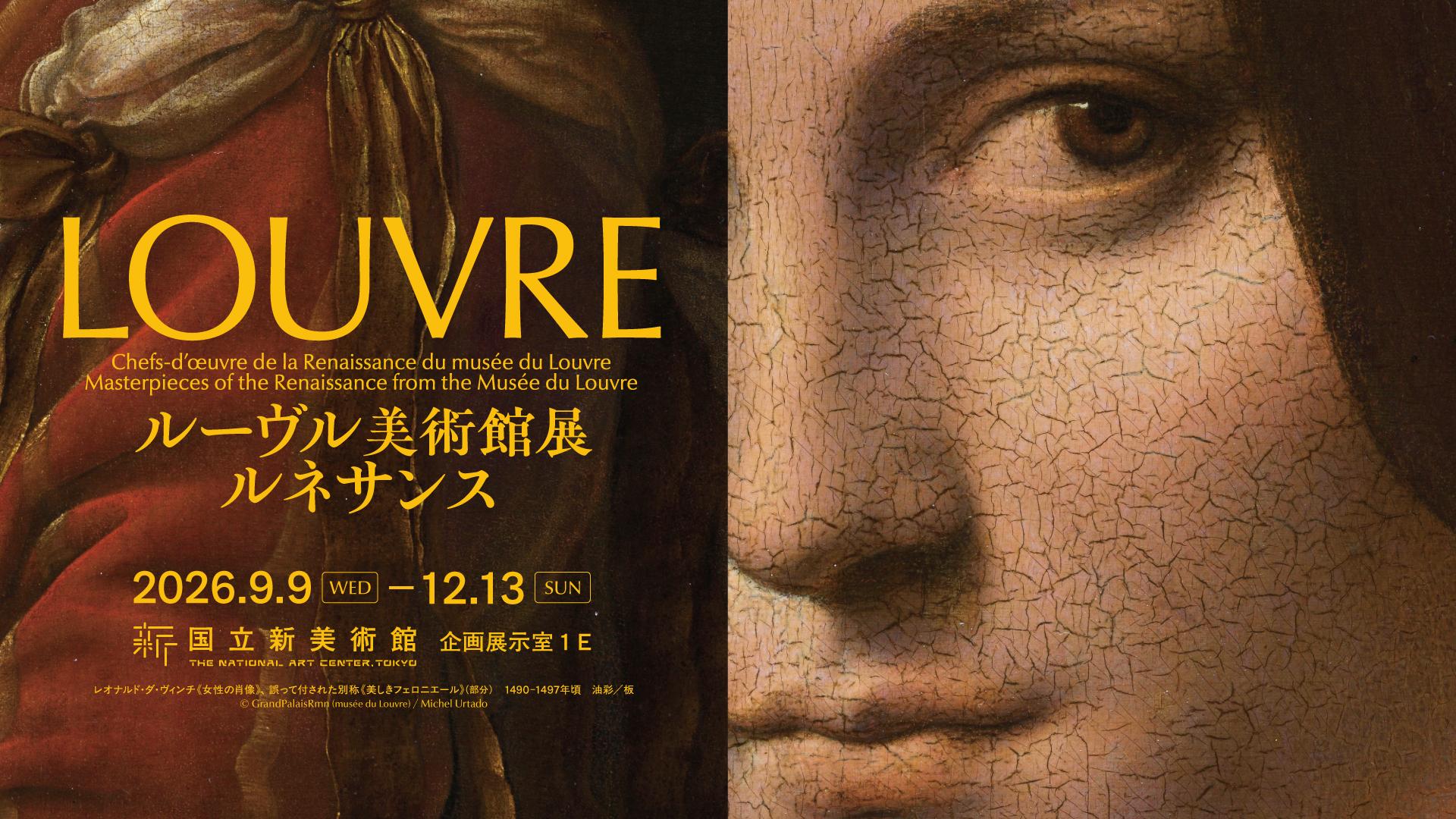
This exhibition explores the essence of the Renaissance art that flourished in Europe during the 15th and 16th centuries, and sheds light on some distinctive aspects of the rich complexity of the art movements of the time through more than 50 works carefully selected from the immense collection of the Musée du Louvre.
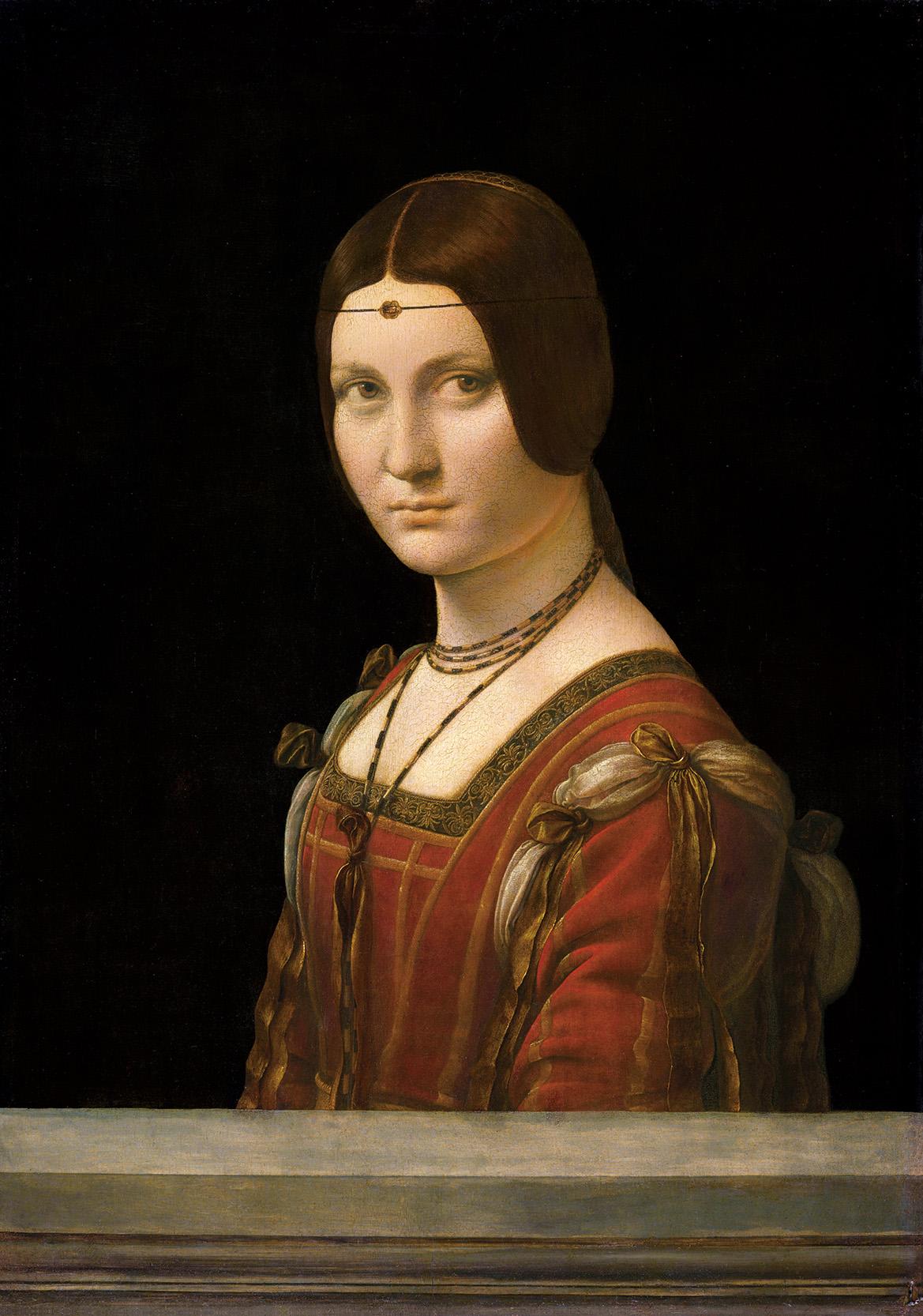
The people of Renaissance Europe began to reevaluate the cultures and societies of Greco-Roman Antiquity, which emphasized the value and agency of human beings. This exhibition features Leonardo da Vinci’s Portrait of a Woman, also known as La Belle Ferronnière, a masterpiece of portraiture from the Renaissance, when a renewed interest in human individuality came to the forefront. This is the first time the work has ever been exhibited in Japan. Throughout his life, Leonardo continually challenged himself to not only portray the physical characteristics of his models but also to capture the complicated emotions that lie just beneath the surface.
This exhibition revolves around four themes inspired by Leonardo da Vinci, a true icon of the Renaissance: travel, technical innovation and refinement, interest in antiquity, and the development of portraiture. Visitors will be presented with a diverse array of works that includes paintings, sculptures, prints, drawings, and decorative arts. Take advantage of this rare and valuable opportunity to experience the true essence of Renaissance art.
Musée du Louvre:
Chefs-d’œuvre de la Renaissance du musée du Louvre
|
Leonardo da Vinci, Portrait of a Woman, incorrectly known as La Belle Ferronnière |
Overview
- Period
-
September 9 (Wed), 2026 – December 13 (Sun), 2026
*December 7 (Mon.) - December 13 (Sun.), 2026: Specified date/time tickets" will be implemented
Closed on Tuesdays
*Open on September 22 (Tue), November 3 (Tue), December 8 (Tue) and Closed on November 4 (Wed) - Opening Hours
10:00–18:00
*10:00–20:00 on Fridays and Saturdays and from December 7 (Mon.) to December 12 (Sat.),2026
*Last admission 30 minutes before closing- Venue
-
The National Art Center, Tokyo
Special Exhibition Gallery 1E
7-22-2 Roppongi, Minato-ku, Tokyo 106-8558 - Organized by
The National Art Center, Tokyo; Musée du Louvre; Nippon Television Network Corporation; The Yomiuri Shimbun; BS Nippon Corporation
Under the auspices of
Embassy of France / Institut français du JaponWith the special sponsorship of
Nomura Securities Co., Ltd.With the sponsorship of
MITSUMURA PRINTING CO., LTD.; TAKENAKA CORPORATION; VACHERON CONSTANTIN; JAPAN POST HOLDINGSWith the cooperation of
Japan Airlines Co., Ltd.; Air France; KLM Royal Dutch Airlines; Nippon Cargo Airline Co., Ltd.; Nippon Express Co., Ltd.; TOKYO FM Broadcasting Co., Ltd.; NTV EVENTS Inc.With the special cooperation of
NIPPON TELEVISION NETWORK EUROPE B.V.
Admission (tax included)
| Advance | 2,200 yen (Adults)、1,300 yen (College students)、900 yen (High School Students) |
|---|---|
| General | 2,400 yen (Adults)、1,400 yen (College students)、1,000 yen (High School Students) |
| Specified date / time tickets *12.7-12.13 | 2,400 yen (Adults)、1,400 yen (College students)、1,000 yen (High School Students) |
・Online Ticket Sales
[Advance] Selling Period: June 18 (Thu), 2026, at 14:00 - September 8 (Tue), 2026, at 23:59
[General] Selling Period: September 9 (Wed), 2026, at 00:00 - December 6 (Sun), 2026, at 16:00
On Sale at: asoview!
・On-Site Ticket Sales
[Advance] Selling Period: June 18 (Thu), 2026 - September 8 (Tue), 2026
[General] Selling Period: September 9 (Wed), 2026 - December 6 (Sun), 2026
On Sale at: The National Art Center, Tokyo
・Specified date / time Ticket Sales
In order to ease congestion, an Advance Reservation System for "specified date / time tickets" has been implemented, from December 7 (Mon) to December 13 (Sun) 2026.
"Specified date / time tickets" will be available for purchase online from 12:00 October 31 (Sat)
*From December 7 (Mon) to December 12 (Sat) 2026, the exhibition extends its opening hours until 20:00. (last admission at 19:30)
* Advance / General tickets are valid until December 6 (Sun), 2026.
* General tickets are available for purchase until December 6 (Sun), 2026.
* Visitors with free admission (such as children under junior school students, disabled people with ID booklets (along with the one assistant) or complimentary ticket holders) do not need to purchase a "specified date / time ticket".
*Even with "specified date / time tickets", you may be asked to wait for admission during busy times.
- Advance and General tickets are valid from Wednesday, September 9 (Wed), 2026 - December 6 (Sun), 2026.
- Admission is free for children 15 and younger (junior high school age and younger). Visitors with disabilities, along with a caregiver, are also eligible for free admission when presenting valid proof of disability.
- Free entrance to the exhibition for high school students from October 1 (Thu) to 14 (Wed), 2026, upon presenting student ID.
- Reduction (100 yen off) applies to visitors who present the ticket stub of a current exhibition at The National Art Center, Tokyo; Suntory Museum of Art; or Mori Art Museum. Please show the ticket stub at the "Masterpieces of the Renaissance from the Musée du Louvre" exhibition ticket booth.
- Students, faculty and staff, of "Campus Members", can view this exhibition for 1,200 yen (students) and 2,200 yen (faculty/staff). Please purchase tickets at the "Masterpieces of the Renaissance from the Musée du Louvre" exhibition ticket booth.
- The following credit cards and e-cash options are available for purchasing tickets at The National Art Center, Tokyo ticket counters.
Credit Cards: MasterCard, VISA, JCB, AMEX, Diners Club, DISCOVER, UnionPay
Electronic Money: QUICPay, Transportation IC Cards, Rakuten Edy, WAON, nanaco, iD
QR Payments: auPay, BankPay, Alipay, WeChat Pay, PayPay, d Payment, Japan Post Pay
List of Works and Exhibition Catalogue
List of Works
Japanes and English
Chinese and Korean
Exhibition Catalogue
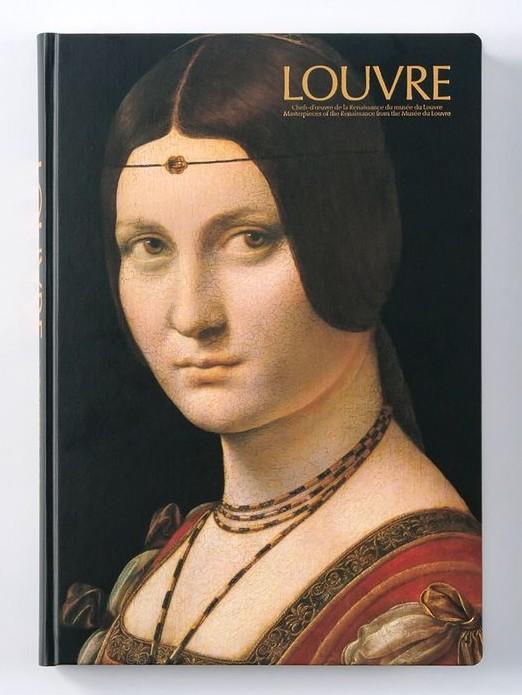
Title: Chefs-d'œuvre de la Renaissance du musée du Louvre
Size: A4 variation (w205 × h290 ㎜)
Peges: 264
Languages: Japanese and French
ISBN:978-4-910253-19-3
[Contents]
● « Le Problème de la Renaissance » ou la Renaissance en question
Oriane Lavit
● Léonard de Vinci sous observation scientifique
Vincent Delieuvin
● La Belle Ferronnière aux yeux de la France du XIXe siècle : quelques réflexions autour de l’origine de ce titre d’usage
Ayako Miyajima
● [Annexe] Textes et documents relatifs aux deux portraits de femmes communément appelés « La Belle Ferronnière » (XVIIe-XIXe siècle)
Ayako Miyajima (éd.)
● Catalogue
I. Le voyage
II. Les innovations et perfectionnements techniques
III. Le regard sur l’Antiquité
IV. L’épanouissement du portrait
● Liste des œuvres
Exhibition Structure
I. Journeys
The Renaissance of the fifteenth and sixteenth centuries saw Europeans embarking on journeys during which they discovered worlds different from any they had previously known. They travelled for commerce, trade, diplomacy, education, warfare, and myriad other reasons. The vigorous interchange of people and goods fostered the economic development of cities and states and helped Renaissance culture flourish.
Standing at the forefront of scholarship were Erasmus, Montaigne, and many other humanists, who travelled throughout Europe using their curiosity as a compass, reflecting upon the customs and traditions they encountered in lands unfamiliar to them. Artists also began to travel more frequently, leaving home to hone their abilities. Artists from northern Europe crossed the Alps to visit Italy, where they were able to sketch ancient ruins and sculptures while studying the harmonious proportions of the human figure and the use of linear perspective in Italian art of the era. In turn, Italian painters began to incorporate the oil-painting techniques and painstaking realism of their northern counterparts.
There were also various external factors that drove artists to cross borders and helped spread artistic styles and techniques even further, ranging from invitations extended by patrons, including rulers and popes, to the need to flee plague or war.
Another notable aspect of Renaissance-era journeys was that kings and emperors moved throughout their vast territories rather than ruling from a permanent central residence. For example, the kings of France moved from château to château, accompanied by their families and courtiers. This itinerant court lifestyle spurred the development of portable luxury furnishings, such as tapestries, decorative yet practical objects that adorned walls while also providing insulation against the cold and serving as room dividers, and trunks used to store clothing and other belongings. A related development was the production of commemorative medals, often bearing the profiles of monarchs and their consorts, to mark rulers’ ceremonial entries into cities. These practices contributed significantly to the development of medallic art.
Venetian painter, The Reception of the Venetian Ambassadors in Damascus
Circa 1511, oil on canvas, 120 × 201 cm
Paris, Musée du Louvre, Department of Paintings
Photo © GrandPalaisRmn (musée du Louvre) / Gabriel De Carvalho / distributed by AMF-DNPartcom
Albrecht Dürer, The Rhinoceros
First edition of 1515, woodcut, 24.5 × 30.2 cm
Paris, Musée du Louvre, Department of Prints and Drawings, Edmond de Rothschild collection
Photo © GrandPalaisRmn (musée du Louvre) / Michel Urtado / distributed by AMF-DNPartcom
Jan van Scorel, Portrait of a Man, Aged Thirty-Two
1521, oil on panel (poplar), 51 × 43 cm
Paris, Musée du Louvre, Department of Paintings
Photo © GrandPalaisRmn (musée du Louvre) / Gabriel De Carvalho / distributed by AMF-DNPartcom
Domenikos Theotocopulos, known as El Greco, Portrait of Antonio de Covarrubias y Leiva (1524-1602)
Circa 1597-1600, oil on canvas, 68 × 58 cm
Paris, Musée du Louvre, Department of Paintings
Photo © GrandPalaisRmn (musée du Louvre) / Mathieu Rabeau / distributed by AMF-DNPartcom
Southern Netherlands?, Pastoral concert
First quarter of the 16th century, wool and silk, 272 × 212 cm
Paris, Musée du Louvre, Department of Decorative Arts
Photo © Musée du Louvre, Dist. GrandPalaisRmn / Philippe Fuzeau / distributed by AMF-DNPartcom
II. Technical Innovations and Refinements
Artistic development in the Renaissance would have been impossible without the innovative techniques that arose in that era. Northern Europe witnessed not only the refinement of oil painting but also technological innovations in clockmaking and printmaking. The development of coiled springs in the fifteenth century made it possible to miniaturize various mechanical devices, which led to the creation of portable pocket watches. Meanwhile, in printmaking, the movable-type printing press invented in Germany in the mid-fifteenth century led to new trends in woodcut printing. Copperplate engraving was another technique that originated in Germany before spreading throughout Europe, and it was used in the reproduction of paintings and sculptures. Alongside woodcut, it came to be regarded as an independent art form.
Printmaking allowed multiple copies of a work to be made from a single master plate, and artists used prints to distribute their compositions to a wider audience. Prints even influenced other artistic media such as faience and enamel. For example, the sixteenth-century engraver and printmaker Marcantonio Raimondi created prints based on drawings by Raphael, and these images frequently served as models for the decoration of Italian pottery known as maiolica. Maiolica was made by applying a white tin-based glaze to bisque-fired pottery, then painting decorative compositions with pigments before the vessel was fired again. The technique allowed for the production of vivid colors that rivalled those found in paintings.
Similar qualities can be found in enamelwork produced in Limoges in central France. Enameling is a decorative technique in which powdered glass is fused through firing to a surface made of copper or another metal. The works of Pierre Courteys, one of Limoges’s most accomplished enamel painters, often reveal the direct borrowing of imagery from Raimondi’s prints.
In late sixteenth-century France, the potter Bernard Palissy developed a particularly innovative technique known as rustiques figulines. Palissy successfully created vividly lifelike pottery décor by casting from life, using molds taken from actual plants and animals. In this section, we explore works from a workshop that continues the tradition of that unique technique.
The molding technique Palissy used in his pottery was adapted from the lost-wax casting method widely used to create bronze sculptures in ancient Greece and Rome. The technique was used much less frequently in the Middle Ages, but it was revived during the Renaissance. It involved creating a wax model and covering it with plaster or clay. Once that material had hardened, the wax inside would be removed by melting it away, and molten bronze would be poured into the resulting cavity. Renaissance sculptors mastered this technique, at once ancient and newly revived, and used it to produce bronze sculptures of all sizes.
Marcantonio Raimondi, after Raffaello Sanzio, known as Raphael, The Judgment of Paris
Circa 1513-1518, chisel, 29.4 cm × 43.8 cm
Paris, Musée du Louvre, Department of Prints and Drawings, Edmond de Rothschild collection
Photo © Musée du Louvre, Dist. GrandPalaisRmn / Angèle Dequier / distributed by AMF-DNPartcom
Pierre Courteys, Ewer stand: the Earth and the Sea
1568, Painted enamel on copper, h. 6.5 cm, diam. 52.5 cm
Paris, Musée du Louvre, Department of Decorative Arts
Photo © GrandPalaisRmn (musée du Louvre) / Sylvie Chan-Liat / distributed by AMF-DNPartcom
France, probably Paris, Oval basin decorated with “rustiques figulines”
1600-1650, clazed earthenware, h. 7.5 cm, w. 54 cm, d. 41 cm
Paris, Musée du Louvre, Department of Decorative Arts
Photo © GrandPalaisRmn (musée du Louvre) / Martine Beck-Coppola / distributed by AMF-DNPartcom
III. Looking to Antiquity
The Renaissance revival of ancient Greco-Roman culture began in the literary world before gradually spreading to the arts. Humanists studied copies of important ancient texts and published their own annotated versions of them. Of all those texts, the Roman poet Ovid’s Metamorphoses played a particularly important role in the development of the visual arts. Composed of numerous tales drawn from Greek and Roman mythology, this Latin epic poem was translated into many languages and published throughout Europe during the Renaissance. Artists were inspired by these mythological narratives and their accompanying printed illustrations to create paintings and sculptures depicting the ancient gods and their stories in deeply human terms.
In addition to those ancient literary works, Renaissance artists also studied ancient architecture and sculpture. They visited the ruins of Rome to sketch the reliefs on triumphal arches and marble statues depicting the gods, and in doing so, gained a more thorough understanding of ancient imagery and modes of representing the human figure. Even those artists unable to travel to Italy were able to study ancient art through printed reproductions and plaster casts.
By the late fifteenth century, ruins were being actively excavated, and fascination with the ancient world continued to grow. Royalty and nobility throughout Europe sought to enhance the prestige of their collections by acquiring small-scale reproductions of ancient sculptures. This growing demand encouraged Renaissance artists to revive the art of bronze casting. By mastering lost-wax casting, they were able to produce a wide variety of bronze works, ranging from monumental sculptures to tiny figures intended for display in the studies of royalty and the aristocracy, as well as decorative plaques and medals.
Workshop of Germain Pilon, Charles IX on horseback
Circa 1570-1574, marble, h. 36 cm, w. 34.5 cm, d. 6 cm
Paris, Musée du Louvre, Department of Sculptures
Photo © Musée du Louvre, Dist. GrandPalaisRmn / Pierre Philibert / distributed by AMF-DNPartcom
Alessandro di Mariano di Sandro Filipepi, known as Sandro Botticelli, The Virgin and Child surrounded by Five Angels
Circa 1470, tempera on wood (poplar), 58.5 × 40.7 cm
Paris, Musée du Louvre, Department of Paintings
Photo © GrandPalaisRmn (musée du Louvre) / Gabriel De Carvalho / distributed by AMF-DNPartcom
Lucas Cranach the Elder, The Three Graces
1531, oil on panel (beech), 36.5 × 24.4 cm
Paris, Musée du Louvre, Department of Paintings
Photo © GrandPalaisRmn (musée du Louvre) / Mathieu Rabeau / distributed by AMF-DNPartcom
IV. The Flourishing of Portraiture
Renaissance humanists fostered a new appreciation of the individual—the idea that each person possesses unique physical and psychological characteristics. This changing perspective on what defined an individual is clearly illustrated by the remarkable increase in biographies, memoirs, travelogues, and other writings in the fifteenth and sixteenth centuries.
Portraiture truly flourished within that context. Portraits immortalize both the physical appearance and the character of a subject, whether through sculpture or painting, preserving their individuality for posterity. While portraiture was originally an artistic genre reserved for depictions of royalty, the aristocracy, high-ranking members of the clergy, and other members of the ruling classes, over time, its use spread to intellectuals, the wealthy, and other members of the emerging middle classes. Portraits of men, or of men with their wives and children, were frequently commissioned to commemorate the achievements and social standing of their subjects, and the garments, possessions, and surroundings depicted within would indicate their profession or social status. In contrast, portraits of women were often commissioned as gifts for fiancés or to commemorate a marriage. In addition, while children were initially painted only as members of a larger family, in time, they began to appear individually in portraits of their own.
This era was marked by major innovations in portraiture. Painters in the north, particularly those in the Netherlands, developed the three-quarter view, in which sitters were depicted at an angle rather than in strict profile. At first, backgrounds often consisted of plain fields of dark gray or black, but gradually, painters began to fill those spaces with landscapes that added a sense of depth to the paintings. This new style began to spread throughout Italy in the late fifteenth century, replacing the profile portraits that had been popular until then.
From the late fifteenth century into the sixteenth, artists placed an ever-increasing emphasis on capturing the inner thoughts and emotions of their subjects through depictions of facial expressions and gestures. Leonardo da Vinci, Titian, and other artists who excelled in portraiture were adept at capturing the poses and gazes of their sitters in ways that breathed life into their painted likenesses.
Master of the Baroncelli Portraits, Portrait of Giacomo di Giovanni d’Antonio Loiani (?)
Circa 1498-1499, silverpoint on blue paper, 14.1 × 9.9 cm
Paris, Musée du Louvre, Department of Prints and Drawings, Edmond de Rothschild collection
Photo © GrandPalaisRmn (musée du Louvre) / Thierry Le Mage / distributed by AMF-DNPartcom
Attributed to Baccio Bandinelli, Portrait of Michelangelo
Circa 1522, oil on panel (poplar), 49 × 36 cm
Paris, Musée du Louvre, Department of Paintings
Photo © GrandPalaisRmn (musée du Louvre) / Gérard Blot / distributed by AMF-DNPartcom
Tiziano Vecellio, known as Titian, Portrait of Francis I of France
Circa 1538, oil on canvas, 109 × 89 cm
Paris, Musée du Louvre, Department of Paintings
Photo © GrandPalaisRmn (musée du Louvre) / Philippe Fuzeau / distributed by AMF-DNPartcom
Gian Cristoforo Ganti, known as Gian Cristoforo Romano, Beatrice d’Este
Circa 1490-1491, marble, h. 59.5 cm, w. 30 cm, d. 24.3 cm
Paris, Musée du Louvre, Department of Paintings
Photo © GrandPalaisRmn (musée du Louvre) / Stéphane Maréchalle / distributed by AMF-DNPartcom
La Belle Ferronnière
Dating and Key Characteristics
Leonardo da Vinci was 30 years old in 1482 when he moved to Milan to serve Ludovico Sforza (1452–1508), the de facto ruler of the Duchy of Milan, and he remained active there until 1499. His painting Portrait of a Woman, known today as La Belle Ferronnière, is believed to have been painted during the latter part of his stay in Milan. The profile style of portrait was still popular in Milan at that time, but Leonardo adopted the three-quarter view developed earlier by painters in northern Europe, particularly those in the Netherlands.
Closer inspection of the posture of the woman reveals a device characteristic of Leonardo’s work. He depicted the woman so that her body and head face in slightly different directions rather than facing in the same direction. Scientific examination of the work conducted in 2014 and 2015 revealed that, in the process of painting the piece, Leonardo made subtle changes to the contours of the back of her head, her back, and her neck, thereby enhancing the sense of motion. That may have made the overall sense of movement more pronounced, making it seem as if the woman had been captured at the very moment she turned towards the viewer, thereby imbuing her with a greater sense of vitality. In addition, it was discovered that Leonardo also shifted the position of the pupil in the woman’s right eye slightly to the left. It is thought that this may have been intended to make the direction of her gaze feel more ambiguous. It does seem that the woman is looking back at us, but it also seems as if she is looking somewhere to our right or behind us, making it difficult to determine what she is truly feeling.
Renaissance theorists and painters placed great importance on capturing and communicating a subject’s innermost thoughts through expressions and gestures, and Leonardo was particularly serious about taking on that challenge. Leonardo’s meticulous adjustments to the woman’s head, body, and gaze in La Belle Ferronnière may have been his attempt to capture the ever-changing complexities of human emotion.
Who Was “La Belle Ferronnière”?
Later tradition holds that “La Belle Ferronnière” was a mistress of King Francis I of France (r. 1515–1547), and that she was the cause of the king’s death. However, the first figure who may be identified as this woman appeared in historical records only at the beginning of the seventeenth century, more than fifty years after the king’s death in 1547. Until the nineteenth century, she was considered to have been a real woman, but modern historians now believe that she was a fictional character whose story took shape over time after the king’s death.
The painting in the French royal collection known as La Belle Ferronnière throughout the seventeenth and eighteenth centuries was not Leonardo’s three-quarter-view Portrait of a Woman, but rather another work titled Portrait of a Woman, which depicts a woman in profile and is also shown in this exhibition. However, the two paintings were confused with each other around the time the royal collection was transferred to the Louvre following the French Revolution at the end of the eighteenth century. The three-quarter-view Portrait of a Woman was erroneously referred to as La Belle Ferronnière, and the name gradually became established as its common title.
A print produced in the early nineteenth century was one factor behind the spread of the incorrect name. The print, executed by Lefevre after a drawing of Leonardo’s work by Jean Auguste Dominique Ingres, who later rose to fame as a master of Neoclassical painting, also included a false inscription that read, “La Belle Ferronnière, Mistress of Francis I.”
Lombard painter. Portrait of a woman, known as La Belle Ferronnière
Circa 1500-1512, oil on panel (walnut), 49 × 35 cm
Paris, Musée du Louvre, Department of Paintings
Photo © GrandPalaisRmn (musée du Louvre) / Franck Raux / distributed by AMF-DNPartcom
Leonardo da Vinci, Portrait of a Woman, incorrectly known as La Belle Ferronnière
Circa 1490-1497, oil on panel (walnut), 63.5 × 44.5 cm
Paris, Musée du Louvre, Department of Paintings
© GrandPalaisRmn (musée du Louvre) / Michel Urtado
Who Might be the Model?
The earliest known historical mention of Leonardo’s La Belle Ferronnière occurs in a book published in 1642 describing works of art belonging to the French royal family at the Château de Fontainebleau (Pierre Dan, Le Trésor des merveilles de la Maison Royale de Fontainebleau, Paris, Sébastien Cramoisy, 1642, p. 135). There it is described that the painting was made by Leonardo and is a “portrait of a Duchess of Mantua.” Later records almost unanimously describe it simply as Portrait of a Woman, but at the end of the eighteenth century, it was first proposed that the model was Lucrezia Crivelli (1464–1534), a mistress of Ludovico Sforza, Duke of Milan. She was also a lady-in-waiting to Ludovico’s wife Beatrice d’Este and became his mistress. A poet and contemporary of Leonardo, Antonio Tebaldeo (1463–1537), mentioned in a poem that Leonardo had painted a portrait of a woman named Lucrezia, which is one reason the model for the work has been identified as Lucrezia Crivelli.
In his poem, Tebaldeo wrote that the soul of Lucrezia, the woman in Leonardo’s portrait, belonged solely to Ludovico, Duke of Milan. If Lucrezia Crivelli was indeed the model for Leonardo’s La Belle Ferronnière, her gaze, which seems directed at the viewer but also elsewhere, may be intended for Ludovico alone. The stone parapet in the foreground may also have been placed there deliberately as a means of making her seem unapproachable to viewers other than Ludovico.
Other suggestions have been made about potential models for the work, including Isabella of Aragon, wife of the previous Duke of Milan, and Beatrice d’Este, but there is no conclusive evidence supporting any of those proposals. Today, most scholars support the theory that the woman in this portrait was indeed Lucrezia Crivelli.
Fashion Characteristics
The hairstyle and garments of the woman in Leonardo’s La Belle Ferronnière were all in fashion in Milan, Mantua, and elsewhere in northern Italy in the 1490s. The long hair parted in the middle and gathered in a ponytail at the back, the bonnet on the back of the head, and the narrow decorative hairband worn across the forehead can also be seen in the sculpture of Beatrice d’Este by Gian Cristoforo Romano and in a portrait and a medal depicting noblewomen from the courts of Mantua and Milan, all three of which are included in this exhibition. In addition, the squared necklines and the sleeves connected to the bodice by ribbons, revealing a white blouse through the gaps at the shoulders, also reflect styles fashionable in northern Italy at the time.
The decorative headband with a single gem in the center was known as a lenza in late fifteenth-century Italy, where it gradually fell out of fashion. However, the accessory experienced a revival in popularity among French women in the early nineteenth century, when Leonardo’s painting rose to fame under the mistaken name of La Belle Ferronnière, and by the 1830s, it had come to be known as a ferronnière.
Related books
A list of materials from the NACT's collection related to the exhibition is available on the OPAC. Please click here to see the list on Current Exhibition-related Materials Exhibit page.
These materials are also available in the Art Library on the 3rd floor. Please click here to see the Art Library's general information.

